Burghley House
Advanced UV Protection & Light Management
Location: Burghley House, Stamford, Lincolnshire.
Installation Team: CSC Window Films & Blinds Ltd
Interventions: Museum-Grade UV Window Films & Bespoke Conservation Blinds
Objective: To safeguard irreplaceable Tudor and Baroque interiors, textiles, and fine art from solar radiation while maintaining aesthetic and historical integrity.
1. Executive Summary
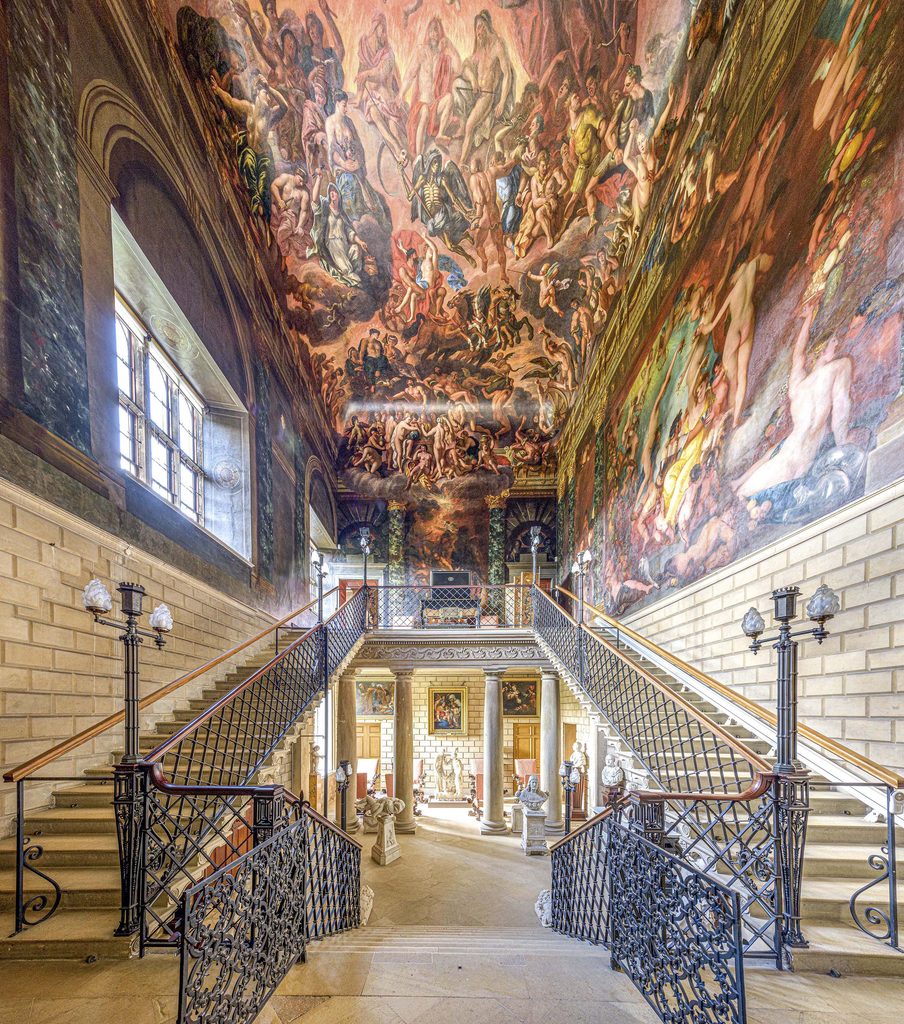
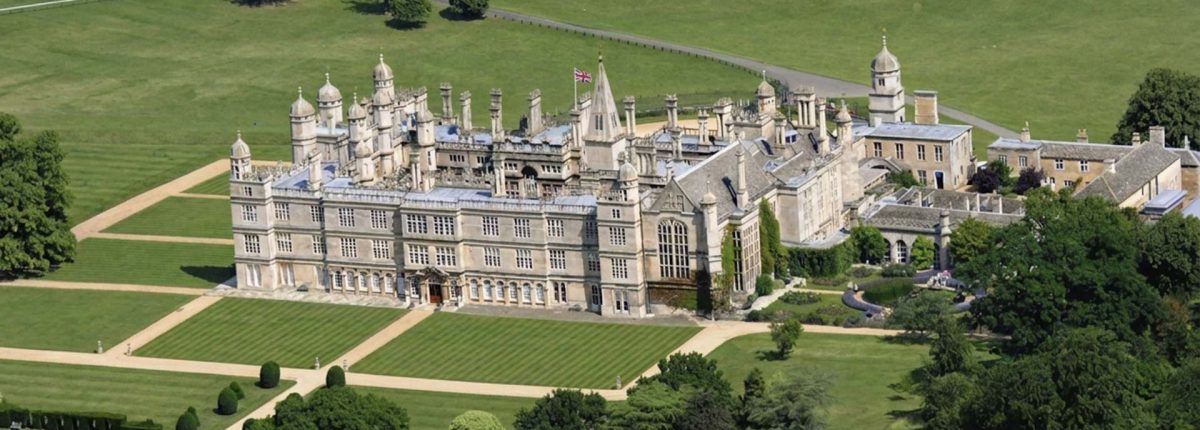
Burghley House in Lincolnshire, built by Sir William Cecil (the Lord High Treasurer to Queen Elizabeth I) between 1555 and 1587, stands as one of the grandest examples of Elizabethan architecture in the United Kingdom. Open to the public and housing an extraordinary collection of fine art, 17th-century Italian master frescoes, rare textiles, and period furniture, the property as with many of its type faces a perpetual environmental challenge, photochemical degradation.
Unregulated sunlight introduces ultraviolet (UV) radiation, visible light, and infrared (IR) heat, all of which cause irreversible photochemical degradation. To counter this, a comprehensive conservation project was commissioned to install museum-grade UV protection films and bespoke solar control blinds. This case study analyses the technical challenges, the engineering of the solutions, and the measurable outcomes of this high-profile heritage intervention.
2. The Preservation Challenge: Heritage vs. Sunlight
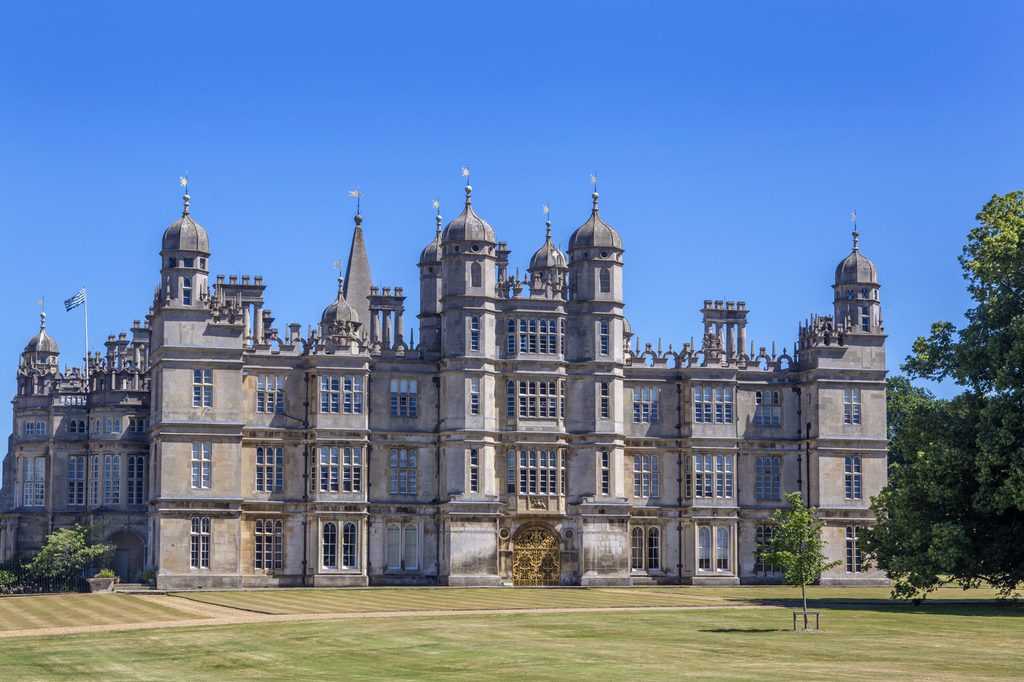
The very architectural features that make Burghley House magnificent—its soaring, multi-paned Tudor windows and expansive bays—render its interiors highly vulnerable to the elements. Sunlight damages historic materials through three distinct mechanisms:
The Mechanisms of Decay
Ultraviolet Radiation (UV)
• Ultraviolet Radiation (UV): Operating in the 100–400 nm wavelength band, UV radiation possesses high photon energy. It breaks down molecular bonds in organic materials, leading to the yellowing of varnishes, embrittlement of silk tapestries, and bleaching of pigments.
Visible Light (Lux)
• Visible Light (Lux): While necessary for visitor viewing, visible light (400–700 nm) contributes significantly to fading, particularly in highly sensitive fugitive dyes used in historic textiles. Unlike UV, visible light cannot be completely blocked; it must be carefully rationed.
Infrared Radiation (IR) and Thermal Fluctuations
• Infrared Radiation (IR) and Thermal Fluctuations: IR radiation (700 nm–1 mm) manifests as radiant heat. When trapped inside historic state rooms, it causes localized spikes in temperature, leading to rapid fluctuations in Relative Humidity (RH). This thermal cycling causes wood to warp, gesso to crack, and canvas paintings to expand and contract catastrophically.
The Specific Vulnerabilities at Burghley
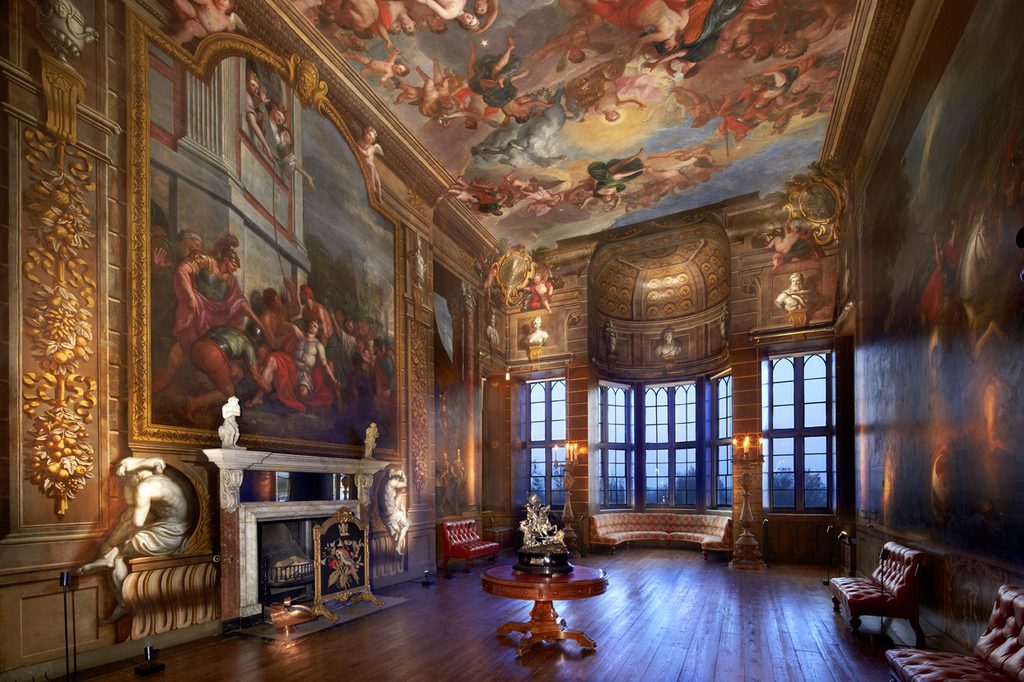
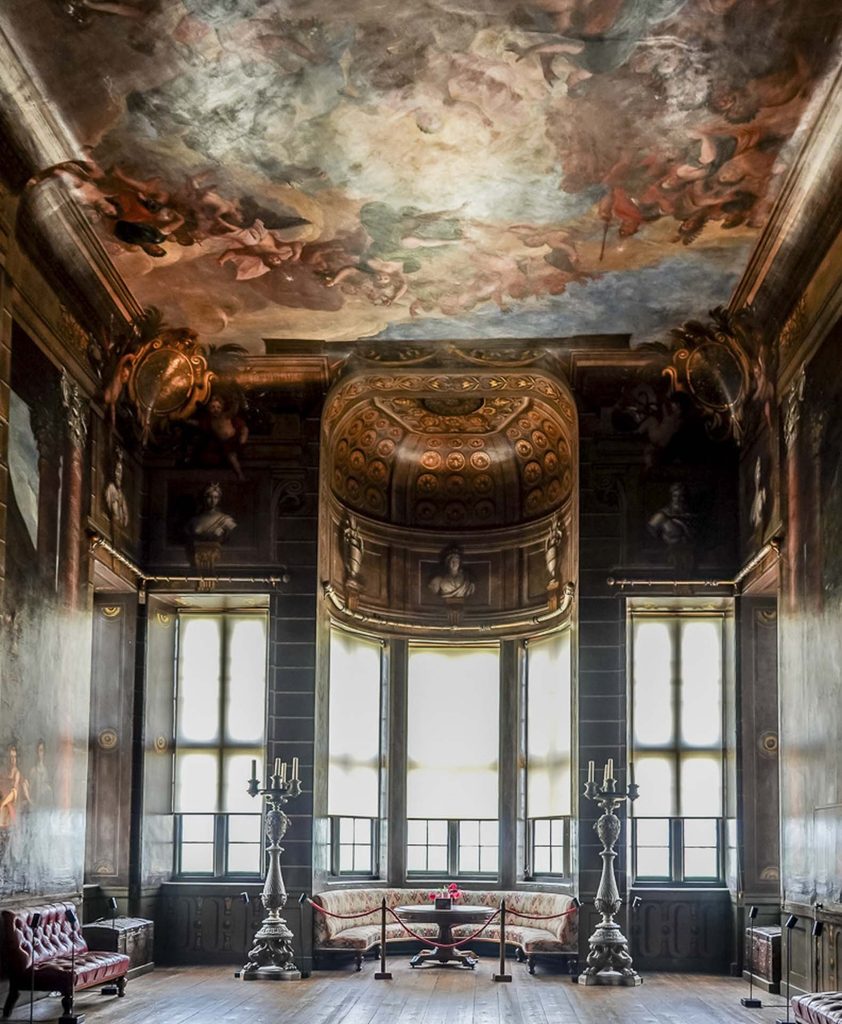
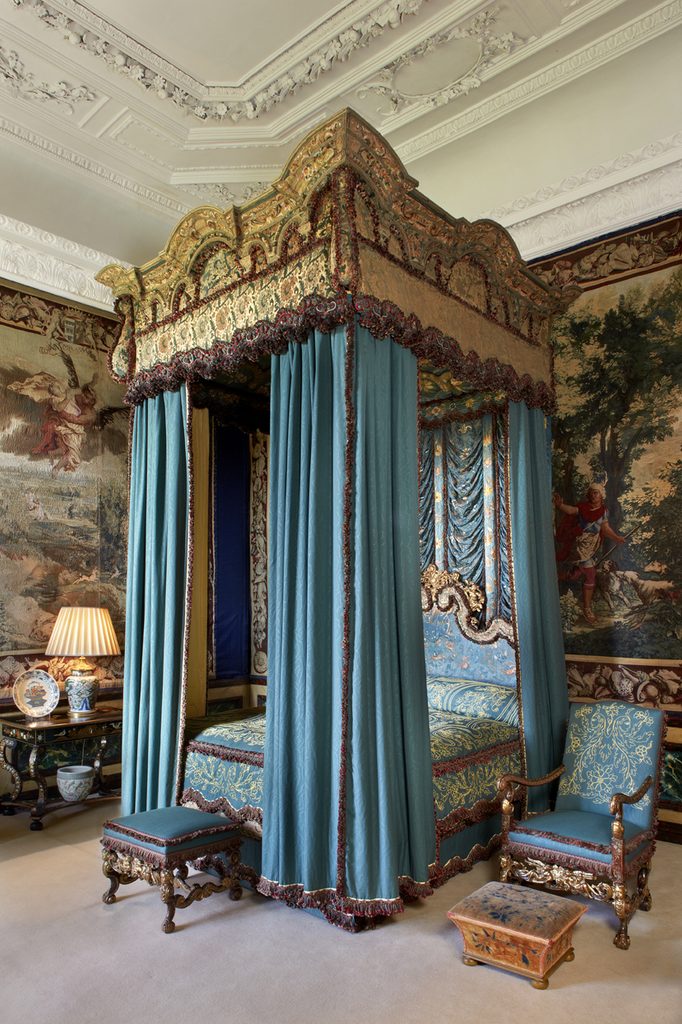
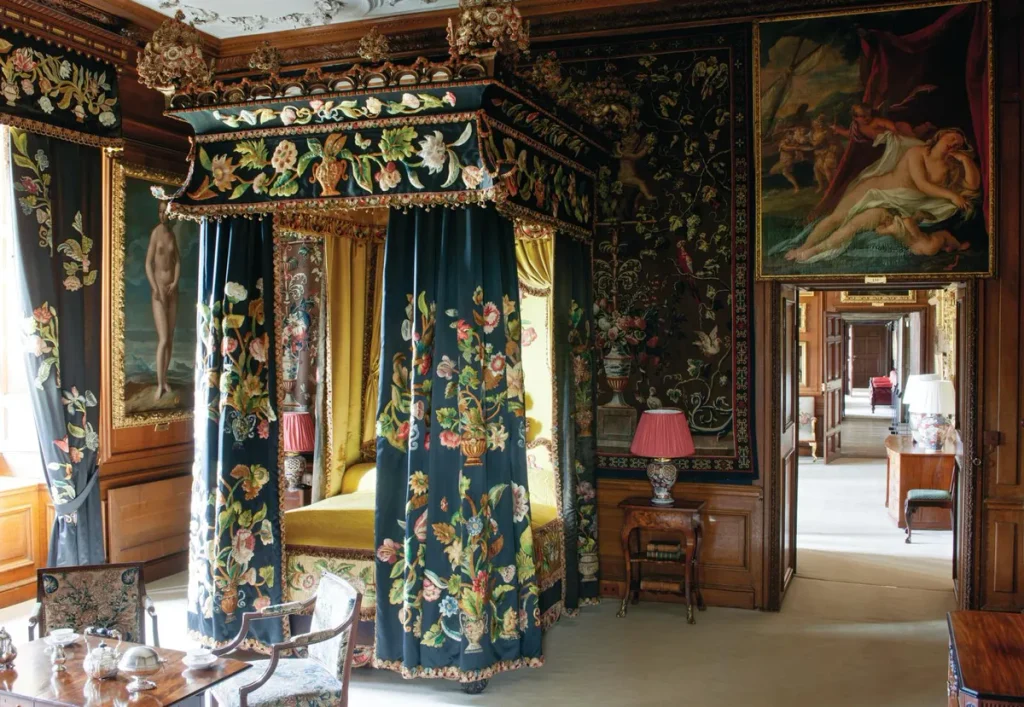
The State Rooms at Burghley House feature unparalleled assets, including the breathtaking ceiling frescoes by Antonio Verrio, delicate 18th-century marquetry furniture, and English and Flemish tapestries. Left unprotected, the cumulative lux-hours would cause rapid, irreversible fading of fabric fibers and the micro-cracking of historic paint layers. The challenge was to halt this degradation without altering the historic facade or plunging the rooms into artificial darkness.
3. Scope of Work & Architectural Sensitivity
The primary mandate of CSC was absolute non-destructive reversibility, adhering strictly to the The National Trust, The Society for the Protection of Ancient Buildings (SPAB) and Historic England guidelines. Because Burghley House is a Grade I listed building, any intervention must leave no permanent mark on the historic fabric of the property.
The project encompassed two primary lines of defence, deployed strategically across vulnerable elevations:
| Intervention | Layer | Technology Deployed | Primary Target |
|---|---|---|---|
| Primary Shield | UVX Museum-Grade UV Window Film | 99.9% UV Elimination (up to 400nm) | |
| Secondary Shield | Bespoke Conservation Roller Blinds | High Lux Reduction & Glare Control |
Site Challenges
1. 2.
Historic Glass Preservation: The windows at Burghley consist of a mix of historic hand-blown cylinder glass, crown glass, and early plate glass set in lead frames (latticework) and stone mullions. The uneven, fragile nature of this glass meant standard commercial installation techniques were impossible.
Aesthetic Restrictions
External modifications were strictly prohibited. Internal additions had to be virtually invisible to avoid disrupting the historic narrative experienced by visitors.
3. Physical Scale
The sheer height and unique geometries of the Elizabethan windows required specialist access equipment and custom-tailored fitting solutions.
4. Technical Analysis: The Multi-Layered Solution
To achieve the stringent conservation targets required for a collection of this calibre, a dual-action system was engineered, combining chemical-barrier window films with mechanical-barrier blinds.
Phase 1: Museum-Grade UVX Window Film Installation
Standard commercial window films often rely on dyed polyester layers that degrade over time and can impart an unnatural, tinted hue to the glass. For Burghley House, an advanced optically clear, nanostructured UV-rejection film was selected.
Spectral Selectivity
• Spectral Selectivity: The film utilizes advanced UV-absorbing micro-particles embedded within a heavy-duty, optically clear polyester matrix. It targets the entire UV spectrum 280nm-400nm, moving beyond standard residential films that often fail to filter the upper 380nm-400nm UVA band.
Application Precision
• Application Precision: Due to the fragility of the hand-blown glass pane variations, standard hard-edge squeegees could cause structural cracking. Installers utilized low-pressure, specialized slip solutions and custom-cut micro-edged templates to ensure the film conformed perfectly to the irregular surfaces without straining the historic lead frames.
The Result
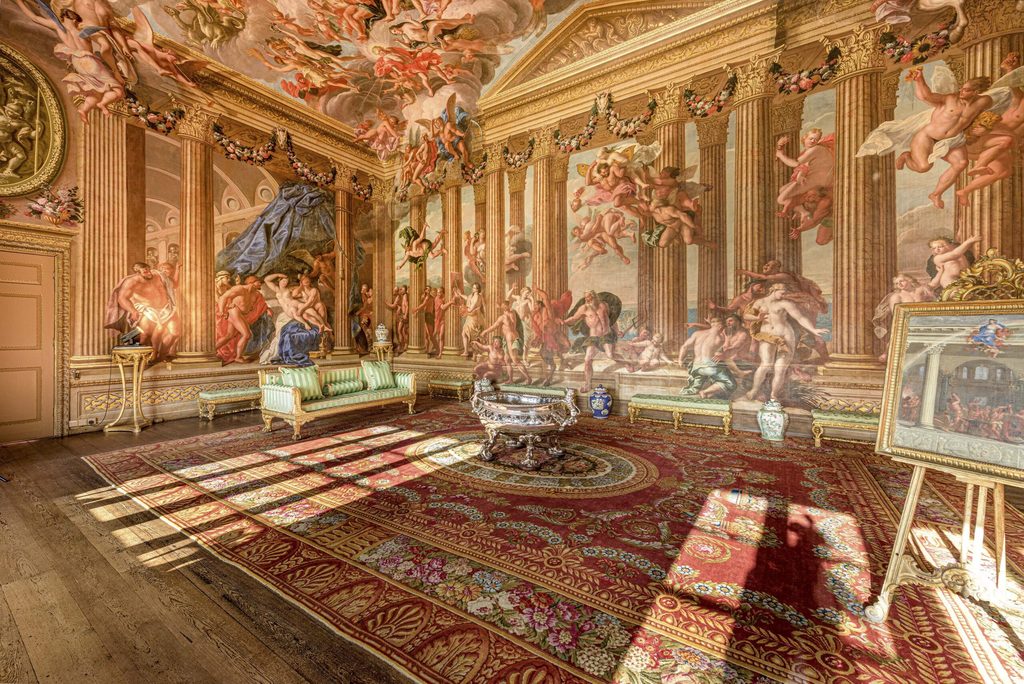
• The Result: The film remains completely invisible to the naked eye, preserving the natural colour rendering index (CRI) of the incoming light. This ensures that the vibrant colours of Verrio’s frescoes and the rich textures of the furniture are seen exactly as the artists intended, entirely free from destructive UV wavelengths.
Phase 2: Bespoke Conservation Blinds
While window film addresses the invisible threat of UV radiation, visible light (Lux) still carries enough cumulative energy to fade delicate textiles over time. To manage this, custom-manufactured conservation roller blinds were installed to complement the window film.
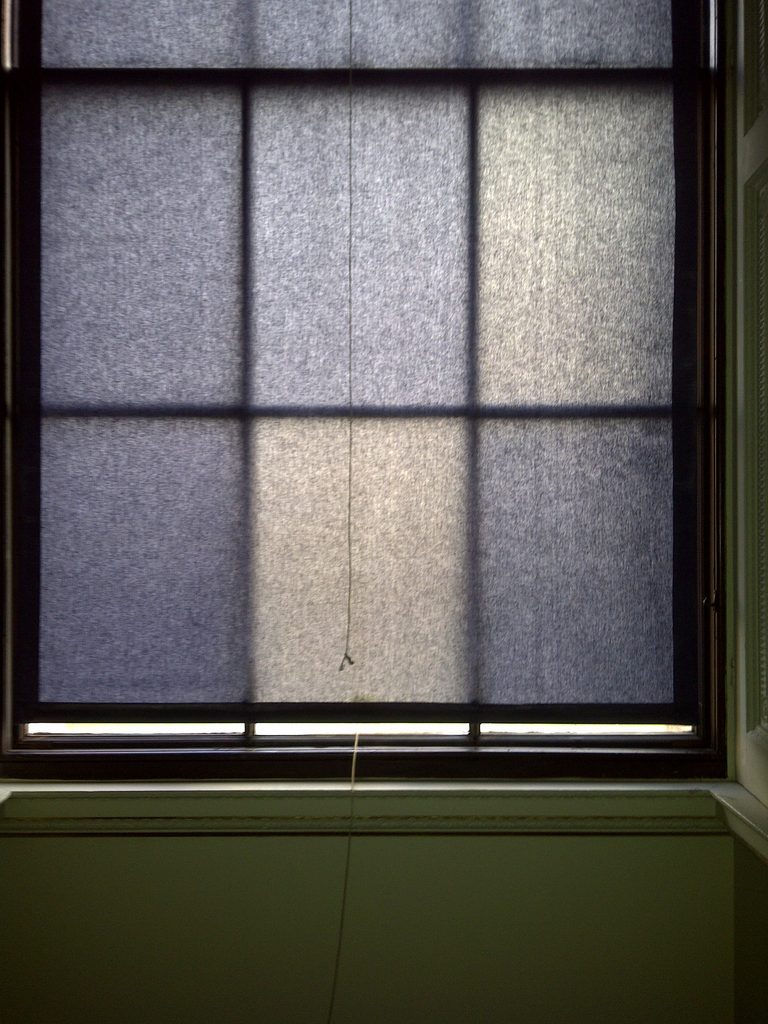
• Material Science: The Vision blind fabric features a highly stable, non-gassing synthetic weave engineered specifically for archive environments. Traditional fabrics can emit Volatile Organic Compounds (VOCs) as they heat up in the sun, which can tarnish metals and degrade paper. The fabrics chosen for Burghley are certified chemically inert.
• Openness Factor & Visual Comfort: A precise weave density (typically 5% to 10% openness) was deployed based on room orientation. This acts as a neutral density filter, dropping the high-intensity summer lux levels down to the internationally recognized conservation standard of 50 to 150 Lux for sensitive textiles, while still allowing a diffused view of the estate’s famous Capability Brown parkland.
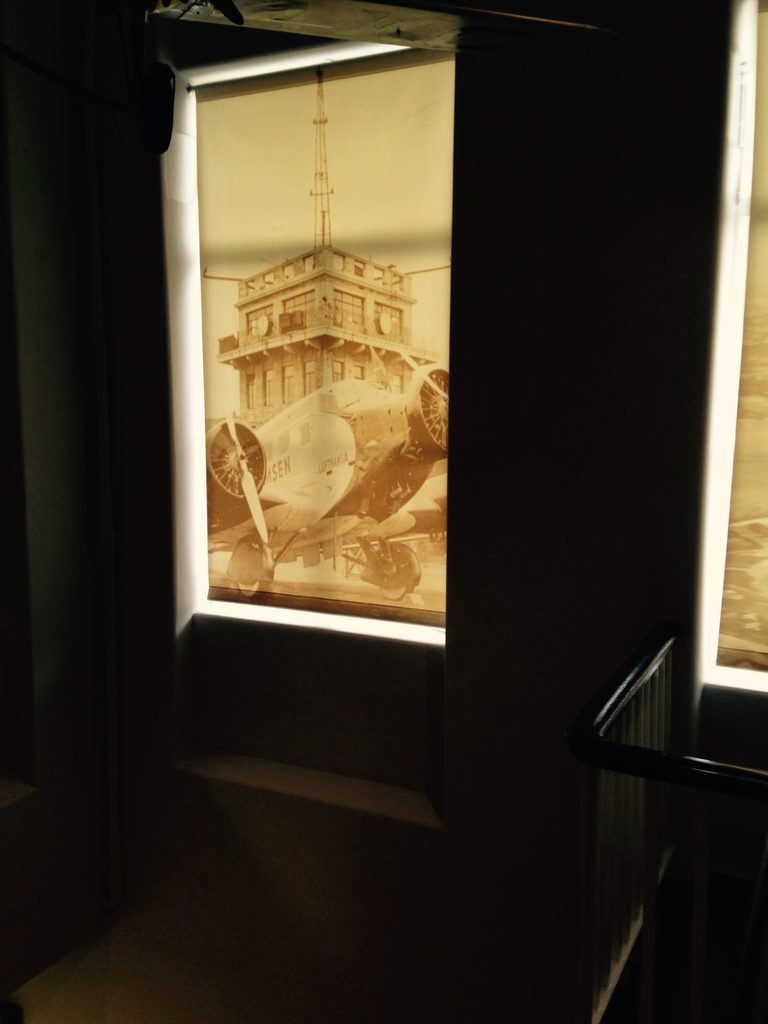
• Engineering and Mounting: To comply with Grade I listing restrictions, drilling into historic timber window frames or stone masonry was prohibited. The installation team utilised existing holes and manufactured bespoke brackets to accommodate both the holes and the blinds that sit discreetly within the window reveals. These systems can be completely removed in the future without leaving any permanent damage to the structural fabric.
5. Implementation Methodology
A project of this magnitude required meticulous execution, divided into three core phases:
Phase I: Environmental Audit and Baseline Logging
Before a single piece of film was cut, the property underwent rigorous environmental monitoring. Handheld UV & Lux Elsec meters and to map ultraviolet output (Lumen} and visible light levels (Lux) across different times of the day and seasons. This data guided the precise specification of the blinds’ openness factors for the East, West, and South-facing elevations.
Phase II: Conservation-Grade Installation
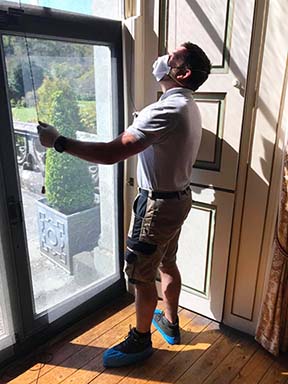
The installation was carried out by senior heritage technicians. Working around priceless tapestries and furniture meant that dust control and moisture management were paramount.
When applying the wet-applied UV film, specialized moisture-absorption barriers were constructed to prevent any water run-off from coming into contact with historic wood panelling or porous stone flooring.
Phase III: Quality Assurance and Calibration
Following installation, a second round of visual inspection on the glass & meter readings were conducted. All areas were checked not only in the room near the Historic items (Lumen & Lux levels) but also checking the films had adhered correctly to the glass.
6. Environmental and Conservation Outcomes
The deployment of UV films and conservation blinds has profoundly altered the environmental profile of the state rooms at Burghley House.
Radiometric Performance Data
Post-installation monitoring confirmed excellent performance metrics across all treated rooms:
UV Rejection
5 & 20 Lumens
• UV Rejection: Ultraviolet radiation entering through the treated windows dropped from baseline ambient levels down to between 5 & 20 Lumens (NT Standard as set out in The National Trust Manual of Housekeeping) This effectively halts the primary driver of photochemical fading.
Thermal Stability
Up to 56%
• Thermal Stability: The IR-rejection properties of the film, combined with the deployable blinds, reduced solar heat gain through the windows by up to 56%.
Lux Control
• Lux Control: With the blinds deployed during peak sunlight hours, light levels are successfully managed down to safe thresholds, preventing high-energy visible light damage to the house’s incredibly rare silk and wool tapestries.
7. Conclusion
The installation of advanced UV window films and bespoke conservation blinds at Burghley House demonstrates how cutting-edge material science can seamlessly blend with historic preservation. By taking a non-invasive, completely reversible approach, the project team successfully insulated the property’s invaluable historic interiors from the devastating effects of solar radiation.
Burghley House’s collection is now safeguarded against the invisible march of light-induced decay, ensuring that its magnificent Tudor and Baroque interiors remain perfectly preserved for generations of visitors to come. This project stands as a model for modern heritage management, proving that the demands of public accessibility and long-term museum conservation can exist in perfect harmony.